
Ashtanga Yoga: The Practice I Keep Coming Back To
A rather humbling beginning
I’ve been practising Ashtanga for 29 years. Shortly after my son was born, I discovered a tall, gangly teacher called Nigel Jones teaching at my local gym.
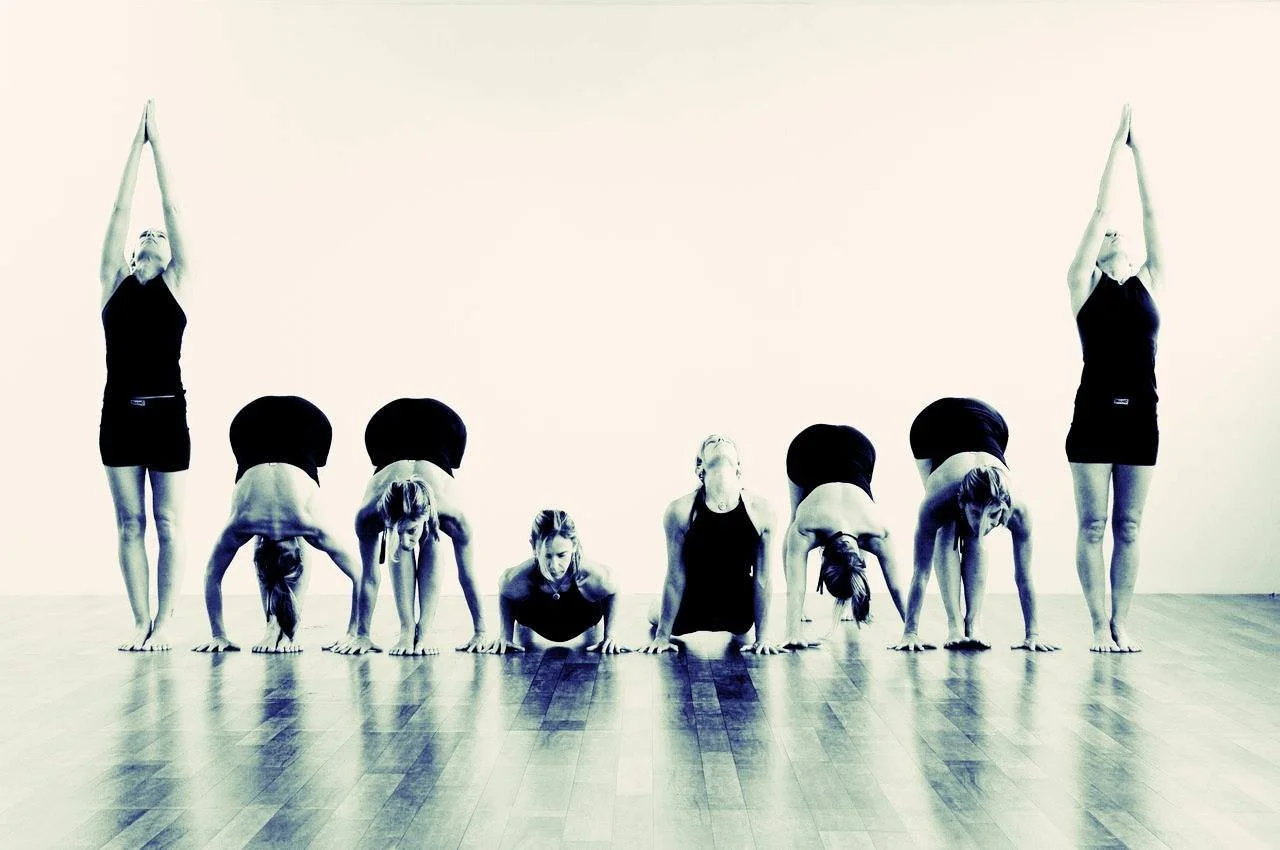
I was very flexilble, having been a dancer, but I didn't have nearly as much strength as I thought. I remember feeling quite dismayed that I couldn’t instantly make those light transitions from Downward Dog to a forward fold. (the jump forward) Meanwhile, Nigel, well over six feet tall, seemed to float through them. Who knew someone so tall could be light as a feather and strong enough to almost float into a handstand?
I was humbled. I was also completely hooked!
The comfort of a familiar sequence
As a beginner, you start with Sun Salutations A and B, followed by the standing postures. Gradually, you learn more of the sequence. I loved that security of knowing where I was going, even when I couldn’t do everything yet.
After those first explorations at the gym, I moved towards what we call Mysore-style or self practice: working through the sequence at your own pace, in a room with other people, with guidance from a teacher. My first teachers in that setting were Hamish Hendry and Roberta Giannotti at Ashtanga Yoga London.
Since then, I’ve become a teacher myself, travelled to Mysore while Pattabhi Jois was alive, and received my first Second Series posture from his grandson Sharath. Both Pattabhi Jois and Sharath have since died, but the experiences I had with this practice remain very much alive for me.
Why do the same thing again?
People sometimes wonder whether a set sequence gets boring. For me, its repetition is one of its greatest strengths.
When the structure is familiar, I can pay attention to what’s happening within it. How is my breath today? Am I rushing through a transition? Is something that felt difficult last week a little more spacious now? Or do I need to ease off?
The sequence offers a framework I can return to, but I never arrive as quite the same person. That’s what keeps it interesting.
I love teaching creative Vinyasa, too. There’s real pleasure in crafting a class with an unexpected turn. But the quiet intensity of Ashtanga draws me back time after time. As a former dancer, I recognise something valuable in the discipline of returning, repeating and refining.
From the practice to my PhD
I became so fascinated by the effects of Ashtanga that I wrote a PhD about it. As I grew stronger in both body and mind through practice, I found myself wondering: what might my dance training and career have been like if I’d discovered Ashtanga earlier?
I took that question to Middlesex University and was awarded a full-time funded scholarship. My fieldwork involved teaching Ashtanga to second-year dancers and exploring its effect on their physical and mental resilience. It brought my two worlds together: dance and yoga, each informing the way I understood the other.
Practising at 62
I’m still practising at 62, though my practice doesn’t look exactly like it did when I began at 33.
These days, I’m more interested in honouring each breath and savouring a transition than rushing to get from one posture to the next. Some days I feel strong; other days I adapt. The sequence gives me somewhere to begin, while leaving room for the body I have that day.
One of my teachers used to say, “There’s enough in the Primary Series to keep us interested for a lifetime.” After 29 years, I think they were right.
Discipline, attention and flow
In yoga, we often use the word tapas when talking about discipline: the steady effort of showing up and staying engaged. That doesn’t have to mean forcing yourself through a practice. Sometimes the disciplined choice is to slow down, change a posture or notice that you need rest.
Ashtanga is often described as a moving meditation. Breath and movement give the mind something to follow, while the familiar sequence lets you become absorbed in what you’re doing. That quality of absorption connects with my interest in flow psychology: those moments when your attention settles into an activity and you’re fully involved in it.
It doesn’t happen every time I step onto the mat. But regular practice gives it somewhere to happen.
Come and practise with us
This month at Yantra, we’re exploring discipline and what it might mean in a life that is already full. If you’re curious about Ashtanga, you don’t need to know the sequence or be able to jump through your arms to begin. I certainly couldn’t.
Our Wednesday Ashtanga Beginners/Foundations class is a place to learn the building blocks and ask questions. On Saturdays, our 75-minute led Half Primary class gives you the chance to experience the rhythm of the sequence with guidance.
Ashtanga is a practice for life!